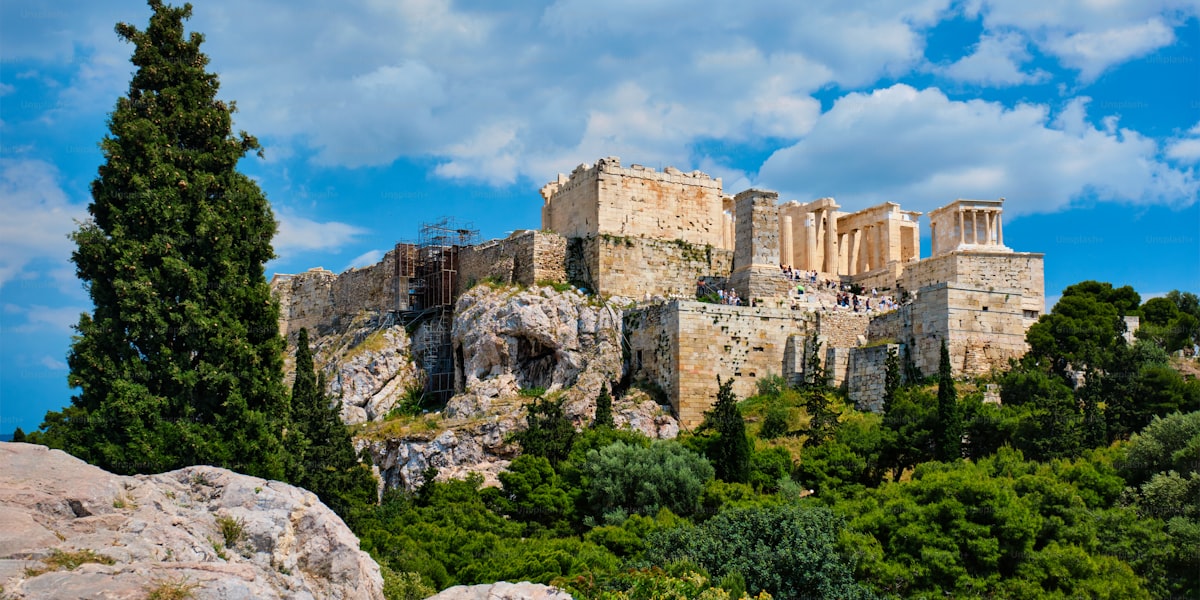
There is no city on Earth quite like Athens. The Acropolis rises above a sprawling, chaotic, endlessly fascinating metropolis where 2,500 years of history collide with street art, rooftop bars, and some of the best food in the Mediterranean. For American retirees, Athens offers an unexpected combination: the cultural richness of Rome, costs closer to Lisbon, a flat 7% tax on foreign pension income, and a warm Mediterranean climate that makes outdoor living possible nearly year-round. It is not the polished, quiet retirement many imagine, but for those who want to feel fully alive in retirement, Athens delivers.
Why Retirees Choose Athens
The headline for American retirees is Greece's flat 7% tax rate on foreign pension income. Introduced in 2020 and valid for 15 years after transferring your tax residence, this regime makes Greece one of the most tax-efficient retirement destinations in Europe. For a retiree drawing $4,000 per month from a 401k or IRA, the difference between Greece's 7% flat rate and Portugal's standard progressive rates can save thousands of dollars per year.
Beyond taxes, Athens offers a lifestyle that is hard to replicate elsewhere. Neighborhoods feel like distinct villages, each with their own character, plateia (central square), and cluster of tavernas where regulars eat the same meal at the same table every evening. The cost of a full Greek dinner with wine, salad, grilled meat, and dessert at a neighborhood taverna is EUR 15-20 per person. The metro is modern and efficient, having been expanded for the 2004 Olympics, and reaches the coast at Glyfada and Vouliagmeni, where you can swim in the Saronic Gulf within 40 minutes of downtown.
Best Neighborhoods for Retirees
Koukaki
Sitting at the foot of the Acropolis and the Filopappou Hill, Koukaki has become one of Athens' most desirable residential neighborhoods. Its pedestrian streets, local tavernas, and proximity to the Acropolis Museum make it feel like a village in the city center. It is walkable, well-connected by metro, and safer than many central Athens neighborhoods. Two-bedroom apartments run EUR 800-1,100 per month.
Pangrati
East of the National Garden and the Panathenaic Stadium, Pangrati is a genuine Athenian residential neighborhood that has so far avoided heavy touristification. The Varnava Square area is the neighborhood's social hub, with outdoor cafes, bakeries, and a weekly farmers market. It is slightly cheaper than Koukaki, with one-bedroom apartments at EUR 550-800, and feels authentically Greek rather than expat-oriented.
Glyfada
For retirees who want coastal living with urban conveniences, Glyfada on the Athens Riviera offers beaches, a palm-lined esplanade, upscale shopping, and a suburban calm that central Athens lacks. The tram connects Glyfada to Syntagma Square in about 50 minutes, and the neighborhood has its own restaurants, cafes, and nightlife. Rents are higher here: EUR 900-1,400 for a one-bedroom, but you get beach access and open sky that the dense city center cannot match.
Key Takeaway
Greece's flat 7% tax on foreign pension income is one of the most generous tax regimes for retirees in Europe. Combined with low living costs and the US-Greece tax treaty protecting Social Security from Greek taxation, Athens can be one of the most tax-efficient retirement bases for Americans with pension income.
The Financially Independent Person Visa
Greece's primary visa for retirees is the Type D National Visa for financially independent persons. You must demonstrate approximately EUR 2,000 per month in income from pensions, Social Security, investments, or savings. The application requires proof of health insurance, a clean criminal record, and documentation showing your financial means.
The initial visa grants a one-year residence permit, renewable annually. After five years of continuous legal residency, you can apply for long-term EU residency. Greek citizenship requires seven years of residency plus demonstrated integration, including basic Greek language proficiency. Greece does allow dual citizenship, which is an advantage over Spain for Americans who want to maintain their US passport while gaining EU citizenship.
Healthcare: Affordable but Variable
Greece's public healthcare system (EOPYY) provides coverage to residents, and Athens has the country's best medical facilities. Major hospitals like Evangelismos and the Onassis Cardiac Surgery Center are well-regarded. However, the public system was strained by the financial crisis of the 2010s, and while it has recovered considerably, wait times for specialists and some procedures can be long.
Most expat retirees use private healthcare in Athens, which is both high-quality and affordable by international standards. A private consultation with a specialist costs EUR 40-80, and comprehensive private insurance for retirees runs EUR 100-200 per month. The Metropolitan Hospital and Hygeia Hospital are the most popular private facilities among internationals, offering modern equipment and English-speaking staff.
Taxes: The 7% Advantage
Greece's non-dom tax regime allows retirees who transfer their tax residence to Greece to pay a flat 7% rate on all foreign-source income, including pension distributions, investment income, and rental income from abroad. This regime is available for 15 years and applies regardless of the amount of income. To qualify, you must not have been a Greek tax resident for five of the six years prior to your application.
The US-Greece tax treaty adds another layer of protection: US Social Security benefits are taxed only by the United States, not Greece. This means that for a retiree whose income consists of Social Security plus pension distributions, only the pension portion faces the 7% Greek tax, while Social Security remains subject to US tax rules only.
Cost of Living Breakdown
Athens is one of the most affordable EU capital cities. A couple can live comfortably on $2,000-$2,300 per month including rent, which is roughly 50-60% less than equivalent spending in Rome or Paris. The real bargains are in dining and entertainment. A full taverna dinner costs EUR 12-18 per person, a freddo cappuccino at a neighborhood cafe EUR 3, and a souvlaki wrap EUR 3.50.
Public transportation is excellent and cheap, with a monthly pass covering metro, bus, and tram at about EUR 30 (reduced for seniors). The metro stations themselves double as archaeological museums, with artifacts discovered during construction displayed behind glass. Groceries from laiki agora (open-air farmer markets) are fresh, seasonal, and remarkably inexpensive, with a full bag of produce often costing under EUR 10.
Key Takeaway
Athens is not just a city to retire in; it is a gateway. From Piraeus port, ferries reach dozens of islands in the Cyclades, Saronic, and Dodecanese groups. Weekend trips to Aegina, Hydra, or Poros are as easy as catching a commuter train in the US, giving retirees the variety of island life without the isolation of living on one full-time.
Is Athens Right for You?
Athens is ideal for retirees who thrive on cultural stimulation, who want walkable neighborhoods with authentic local character, and who are drawn to the tax advantages of Greece's 7% pension regime. It suits those who enjoy urban energy and do not mind a city that is noisy, sometimes chaotic, and always interesting. The main trade-offs are extreme summer heat that can confine you indoors in July and August, air quality that trails cleaner Mediterranean cities, and a bureaucratic system that tests your patience. But for retirees who want to be surrounded by 2,500 years of history, eat extraordinary food for very little money, and island-hop on weekends, Athens offers a retirement that is anything but boring.