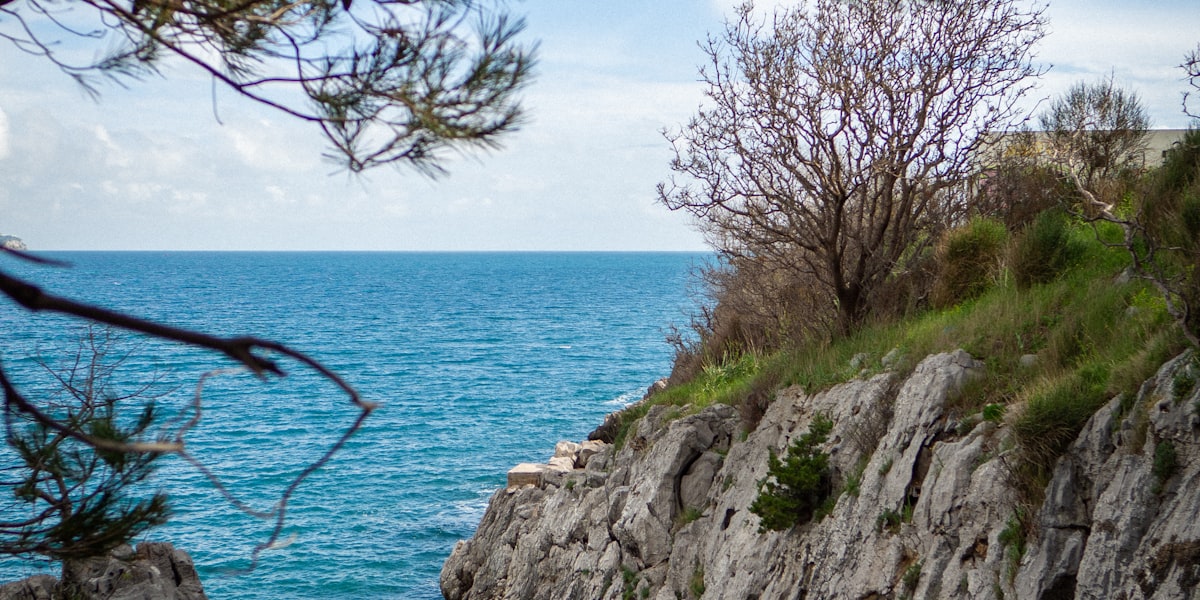
Budva sits on one of the most beautiful stretches of the Adriatic coast, offering American retirees something remarkable: European Mediterranean living at Balkan prices, with zero tax on foreign pension income. This ancient walled town, backed by dramatic mountains and fronted by turquoise waters, is quietly becoming one of the smartest retirement picks in Europe for those willing to explore beyond the usual destinations.
Why Retirees Choose Budva
The financial case for Montenegro is compelling. A couple can live comfortably on $1,950 per month, roughly half what the same lifestyle would cost on the Dalmatian coast of neighboring Croatia. Montenegro uses the Euro despite not being an EU member, which means you avoid currency exchange headaches while benefiting from prices that reflect a Balkan rather than Western European economy. A seafood dinner at a waterfront konoba costs EUR 12 to EUR 18 per person. A cold Niksicko beer on the Old Town square runs EUR 2.50.
But the real headline is taxation. Montenegro does not tax foreign-source pension income for residents. Your US Social Security, 401(k) distributions, and private pension payments arrive untouched by Montenegrin tax authorities. Combined with the US-side Foreign Earned Income Exclusion and standard deductions, many retirees find their overall tax burden drops significantly compared to living in a US state with income tax.
Best Areas for Retirees
Budva Old Town and New Town
Budva's medieval Old Town is a compact maze of stone lanes, small churches, and seafood restaurants perched on a peninsula jutting into the Adriatic. Living inside the walls appeals to those who love atmosphere, though apartments are small and can be noisy in summer. The surrounding new town offers modern apartments with better layouts and amenities at lower prices. One-bedroom apartments in the new town range from EUR 400 to EUR 700 per month, while Old Town commands EUR 600 to EUR 1,000.
Becici and Rafailovici
These beachside neighborhoods just south of Budva offer a quieter alternative with some of the best sandy beaches on the coast. Modern apartment buildings with sea views, swimming pools, and parking are increasingly popular with expats. Rents for a two-bedroom apartment range from EUR 600 to EUR 1,000 per month. The area has good restaurants, small supermarkets, and is connected to Budva by a pleasant 15-minute coastal walk.
Kotor Bay
The stunning Bay of Kotor, 20 minutes north of Budva, offers a fjord-like setting with mountains plunging into calm waters. The UNESCO-listed town of Kotor and the quieter villages of Dobrota, Prcanj, and Stoliv appeal to retirees seeking dramatic scenery and a slower pace. Housing is generally 15 to 25 percent cheaper than Budva's beachfront. The trade-off is less beach access and more rain than the open coast.
Key Takeaway
Rent before you buy. Montenegro's property market has seen rapid development and prices vary dramatically by location and quality. Spend at least three to six months renting in different areas before committing to a purchase. Many retirees find that the Becici area offers the best balance of beach access, modern amenities, and value.
Residency Process
Montenegro's residency process is relatively straightforward compared to most European countries. American citizens can stay visa-free for up to 90 days, giving you time to explore before committing. To apply for a temporary residence permit, you need a long-term rental agreement or proof of property ownership, health insurance valid in Montenegro, proof of income equivalent to at least the average Montenegrin salary (approximately EUR 700 per month), and a clean criminal background check.
The initial temporary residence permit is valid for one year and is renewable. After five years of continuous temporary residence, you can apply for permanent residence. Citizenship is possible after 10 years of legal residence, though you must renounce other citizenships as Montenegro does not generally allow dual nationality. Many American retirees opt to maintain permanent residence without pursuing citizenship.
Healthcare: The Honest Picture
Healthcare is the area where Montenegro lags furthest behind Western Europe. The public system, centered on Dom Zdravlja health centers in each town, provides basic care but facilities are often dated, wait times can be long, and English-speaking staff is not guaranteed. For routine matters like blood pressure checks, prescriptions, and basic consultations, the public system is adequate.
Private clinics in Budva and Podgorica offer better facilities and shorter waits, with a specialist consultation costing EUR 30 to EUR 60. For serious medical conditions, many expats travel to Belgrade (4 hours by car), which has excellent hospitals, or to Italy or Greece for specialized treatment. International health insurance with medical evacuation coverage is strongly recommended for retirees. Policies run EUR 150 to EUR 350 per month depending on age and coverage.
Key Takeaway
Do not move to Montenegro expecting Western European healthcare. Come with comprehensive international insurance that includes medical evacuation. For routine care, private clinics are affordable and adequate. For anything serious, you will likely travel abroad, which is both practical and common among expats in the region.
Daily Life on the Adriatic
Life in Budva revolves around the sea and the seasons. Summers bring warm swimming weather, outdoor dining, and a lively cultural calendar including the Budva Theatre City festival. Winters are mild by Northern European standards, with temperatures rarely dropping below 40 degrees F on the coast, though rain is frequent from November through March. The shoulder seasons of April to May and September to October are arguably the best months, with warm weather, empty beaches, and lower prices.
Montenegro packs remarkable geographic diversity into a tiny country. Within a two-hour drive from Budva, you can reach the alpine landscapes of Durmitor National Park, the dramatic Tara River Canyon (Europe's deepest), and the serene waters of Lake Skadar. Weekend road trips are a genuine pleasure, and the country's small size means nothing is far away.
Cost of Living Breakdown
Groceries are 30 to 50 percent cheaper than US prices. The Voli and Idea supermarket chains offer good selections, and local green markets sell excellent seasonal produce at even lower prices. Montenegrin wine, particularly from the Plantaze winery in the Cemovsko Polje region, is excellent value starting at EUR 3 per bottle. Dining out remains remarkably affordable: a full grilled fish lunch with salad and wine at a coastal konoba costs EUR 10 to EUR 15.
Internet infrastructure has improved significantly in recent years, with fiber connections available in most coastal areas at speeds of 50 to 100 Mbps. Mobile coverage from Mtel, Telenor, or Crnogorski Telekom is reliable along the coast. There are no direct flights from the US, so connections typically route through Istanbul, Vienna, or Belgrade, with total travel time of 12 to 14 hours from the East Coast.
Is Budva Right for You?
Budva is ideal for retirees who prioritize beautiful scenery, low taxes, and affordable European living over healthcare infrastructure and established expat communities. It works best as a retirement destination for healthy, active retirees in their 60s who want to stretch their dollars on the Mediterranean while the country continues to develop. If world-class hospitals and large English-speaking communities are non-negotiable, you may be better served by Malta or Portugal. But if you want Adriatic beauty at a fraction of Croatian or Italian prices with zero pension tax, Budva is hard to beat.