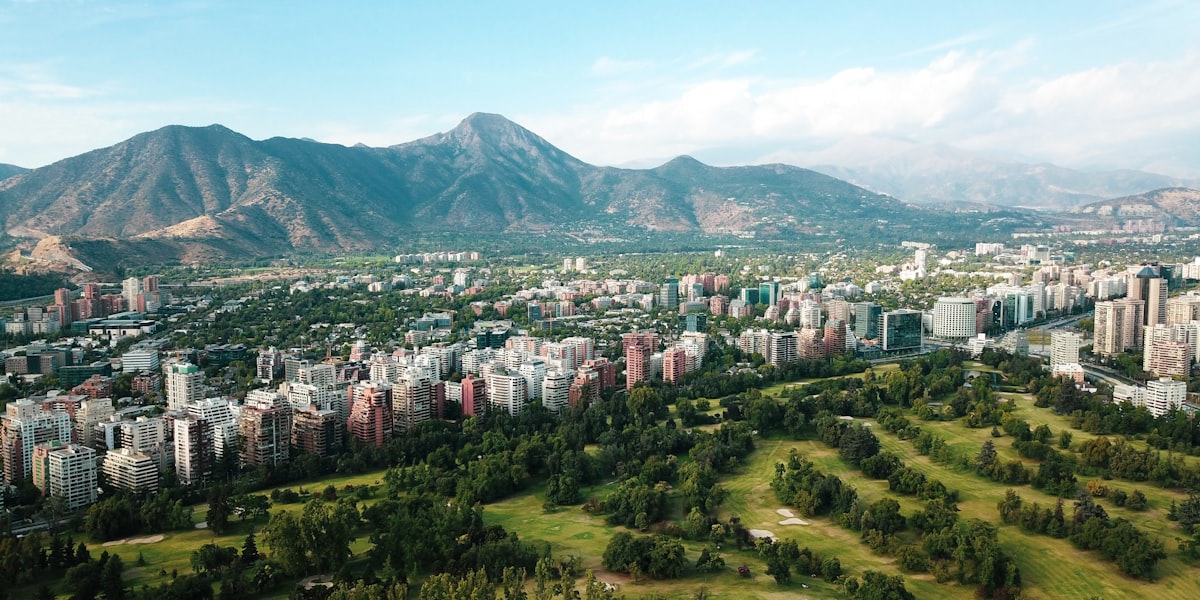
Santiago is the retirement destination for those who want Latin American affordability without sacrificing first-world convenience. Chile's capital of seven million sits in a broad valley framed by the snow-capped Andes, offering retirees world-class healthcare, a modern Metro system, excellent wine, and a cost of living roughly 40-50% below comparable US cities. With a three-year tax holiday on foreign income and a straightforward residency process, Santiago makes a compelling case as one of South America's best-kept retirement secrets.
Why Retirees Choose Santiago
Chile is the most developed economy in South America, and Santiago reflects that. The city's infrastructure rivals European capitals: a clean, efficient Metro covers 140 kilometers across seven lines, highways are well-maintained, tap water is safe to drink, and internet speeds average 200 Mbps with widespread fiber coverage. For retirees accustomed to American standards of convenience, the transition to Santiago feels remarkably smooth.
The geography is extraordinary. The Andes mountains rise dramatically on the eastern horizon, and within 90 minutes you can be skiing at world-class resorts like Valle Nevado in winter, sunbathing on Pacific beaches in Vina del Mar, or touring vineyards in the Maipo or Casablanca valleys. Santiago itself has four distinct seasons: warm, dry summers from December to February with temperatures reaching the mid-80s, and cool, wet winters from June to August with lows in the upper 30s.
Safety in Santiago is generally good by Latin American standards. While petty crime exists (as in any major city), violent crime rates are among the lowest on the continent. The wealthier eastern communes of Providencia, Las Condes, and Vitacura feel particularly secure, with well-lit streets, private security, and an abundance of parks.
The Retirement Visa
Chile offers a specific retirement (jubilacion) visa for those with pension or retirement income. The requirements are straightforward: you need to demonstrate a stable monthly income of approximately $1,000 or more from pension, Social Security, or retirement accounts. Documentation must be apostilled and translated into Spanish.
The initial visa grants one year of temporary residency, renewable annually. After one year of temporary residency, you can apply for permanent residency. Chilean citizenship becomes available after five years of permanent residency, though few retirees pursue it since permanent residency provides nearly all the same rights.
The application process is handled through Chile's Departamento de Extranjeria and typically takes 30-60 days. While the bureaucracy can be slow, the requirements are clear and well-documented compared to many Latin American countries.
Key Takeaway
Chile grants new tax residents a three-year exemption from tax on foreign-source income. This means your Social Security, pension, and investment income from the US are not taxed by Chile for your first three years of residency, giving you time to plan your long-term tax strategy.
Healthcare: Latin America's Best
Chile's healthcare system is widely considered the best in Latin America. The country operates a dual public-private system. FONASA is the public system, available to all residents, which provides good basic care at low cost. ISAPREs are private health insurance companies that offer faster access to premium facilities.
Santiago's private hospitals are genuinely world-class. Clinica Alemana, Clinica Las Condes, and Clinica Santa Maria rank among the best hospitals in Latin America, with modern equipment, English-speaking doctors, and US-level care standards. A specialist consultation at a private clinic runs $50-$80. An MRI costs $200-$400. Even complex surgeries cost a fraction of US prices: a hip replacement runs $8,000-$15,000 compared to $30,000-$50,000 in the United States.
For retirees, a mid-tier ISAPRE plan costs roughly $150-$250 per month depending on age and coverage level. This provides access to private hospital networks with minimal wait times. Many expats use a combination of FONASA for routine care and an ISAPRE supplemental plan for specialists and emergencies.
Cost of Living: First-World Quality, Developing-World Prices
Santiago offers excellent value relative to its quality of life. A comfortable two-bedroom apartment in Providencia, one of the most popular expat neighborhoods, rents for $700-$1,000 per month. In upscale Las Condes, expect $900-$1,400. Budget-conscious retirees can find good apartments in Santiago Centro or Nunoa for $500-$700.
Groceries are affordable, especially at the ferias libres (open-air markets) that operate in every neighborhood on set days. Fresh produce, meat, and seafood are high quality and roughly 40% cheaper than US equivalents. A set lunch (colacion or menu del dia) at a neighborhood restaurant costs $5-$8. Dining at a good restaurant with wine runs $20-$35 per person.
Chilean wine is world-class and absurdly cheap locally. Excellent bottles from Concha y Toro, Errazuriz, or smaller boutique vineyards cost $5-$15 at the supermarket. Transportation is also very affordable: a monthly Metro pass costs about $35-$40, and Uber rides across the city rarely exceed $8-$12.
Key Takeaway
Santiago delivers a quality of life comparable to Southern European cities like Madrid or Barcelona at roughly half the cost. A couple spending $2,000 per month here enjoys a lifestyle that would require $4,000-$5,000 in the US or $3,000-$4,000 in Southern Europe.
Best Neighborhoods for Retirees
Providencia
The most popular neighborhood for expats, Providencia offers tree-lined streets, excellent restaurants, safe streets, and easy Metro access. It strikes the best balance between urban convenience and residential calm. Rents range from $700-$1,100 for a two-bedroom apartment.
Las Condes
Santiago's upscale eastern commune has modern high-rises with Andes views, shopping malls, and a polished feel. It is home to Clinica Las Condes and many embassies. The atmosphere is more suburban and car-oriented than Providencia. Two-bedroom apartments run $900-$1,500.
Nunoa
A more bohemian, slightly edgier neighborhood with excellent parks (including the sprawling Parque Bustamante), craft breweries, and a younger vibe. Rents are 20-30% lower than Providencia, making it attractive for budget-conscious retirees who still want walkability and culture. Expect $500-$800 for a two-bedroom.
Taxes: The Three-Year Advantage
Chile offers new tax residents a remarkable benefit: a three-year exemption from taxation on foreign-source income. During this period, your US Social Security, pension distributions, investment income, and IRA withdrawals are not subject to Chilean tax. You continue paying US taxes as required, but avoid any double taxation.
After the three-year holiday expires, Chile taxes worldwide income at progressive rates up to 40%. However, the US-Chile tax treaty provides relief by preventing double taxation. US Social Security is generally taxed only by the United States under the treaty. Careful planning with a cross-border tax advisor before your third anniversary can help optimize your ongoing tax situation.
Practical Considerations
Santiago's main drawback is winter air quality. From May through August, a thermal inversion traps smog in the valley, creating air quality issues that can affect those with respiratory conditions. The eastern communes at higher elevations (Lo Barnechea, parts of Las Condes) have noticeably cleaner air. Summer air quality is excellent.
Chile is earthquake country. Santiago is well-prepared with strict building codes, and modern apartment buildings are designed to withstand major seismic events. The 2010 earthquake (magnitude 8.8) caused remarkably little structural damage in Santiago proper, a testament to Chilean engineering standards.
Chilean Spanish is challenging. Chileans speak rapidly, drop consonants, and use extensive local slang (chilenismos). Many retirees find Chilean Spanish harder to understand than the clearer dialects spoken in Colombia or Ecuador. That said, English proficiency among professionals and younger Chileans in Santiago is reasonable, and you can manage daily life with basic Spanish.
Is Santiago Right for You?
Santiago is the best choice for retirees who want modern, first-world infrastructure in a Latin American setting. It works particularly well for those who value excellent healthcare, enjoy four seasons, appreciate wine and outdoor recreation, and have a monthly budget of $1,500-$3,000. If you are looking for a tropical beach retirement or the absolute lowest cost of living, other destinations will serve you better. But for retirees who want a cosmopolitan city with genuine substance, world-class medical care, and easy access to mountains, ocean, and wine country, Santiago is an outstanding choice that remains surprisingly under the radar.