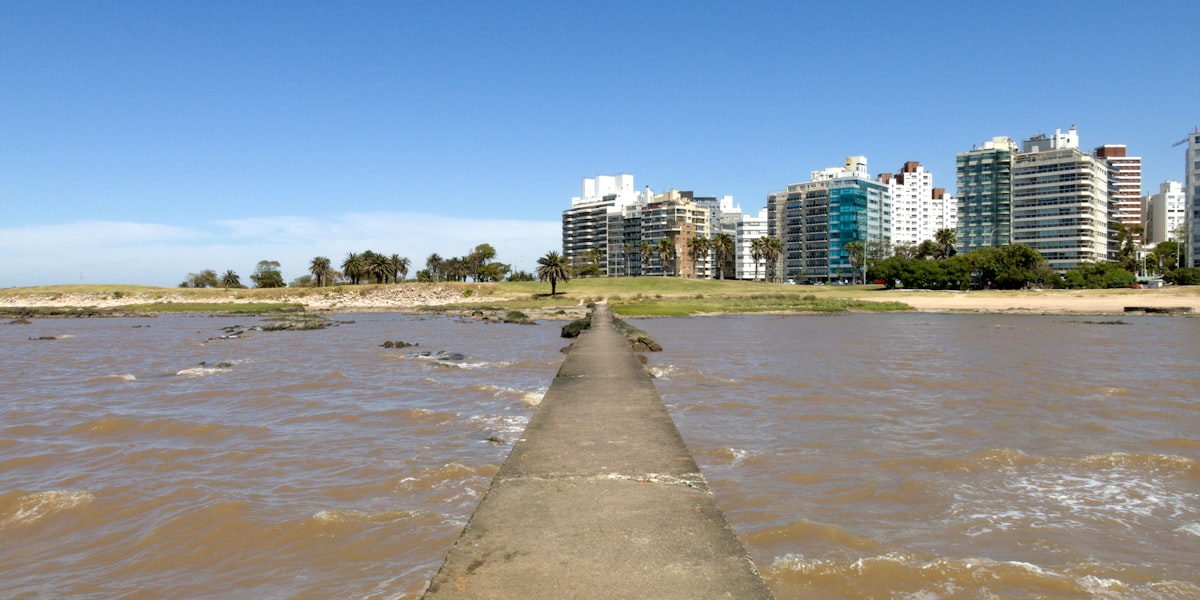
Montevideo, the capital of Uruguay, is the retirement destination for Americans who prioritize safety, stability, and a European-flavored lifestyle above rock-bottom prices. Known as the "Switzerland of South America," Uruguay consistently ranks as the continent's safest, most democratic, and most transparent nation. Its capital city of 1.8 million sits on the Rio de la Plata with a 22-kilometer waterfront rambla, a thriving cafe culture, and a quality of life that rivals southern European capitals - at costs 30-40% below what you would pay in comparable U.S. cities.
Key Takeaway
Uruguay offers new residents an 11-year tax holiday on foreign-source income, meaning your Social Security, pension, and investment returns are completely untaxed by Uruguay for over a decade. Combined with South America's highest safety ratings and a stable democracy, Montevideo is the premier choice for retirees who want peace of mind above all else.
Why Montevideo Attracts a Different Kind of Retiree
Montevideo does not compete on price with Medellin or Cuenca. It does not offer tropical beaches like Cartagena or year-round warmth like Panama City. What it offers instead is something harder to quantify but deeply valuable in retirement: a sense of security and predictability. Uruguay has no history of coups, no currency crises approaching Argentine levels, strong property rights, independent courts, and press freedom that ranks ahead of the United States. For retirees who have worked a lifetime to build their savings, Uruguay's stability provides genuine peace of mind.
The lifestyle is distinctly European. Montevideo was built by Spanish and Italian immigrants, and that heritage shows in the architecture, the food culture, the afternoon coffee rituals, and the Sunday asado (barbecue) traditions. The rambla - the waterfront promenade stretching from Ciudad Vieja through Pocitos to Carrasco - is the city's social spine, filled with joggers, mate-sipping friends, and sunset watchers every evening.
Healthcare: Comprehensive and Affordable
Uruguay's healthcare system is built around mutualistas - nonprofit health cooperatives that provide comprehensive coverage including doctor visits, hospitalization, surgery, dental, and prescriptions for a monthly fee. This system is unique in Latin America and provides a level of coverage and simplicity that retirees find reassuring.
The Mutualista System
Major mutualistas include Medica Uruguaya, Casmu, and SMI. Monthly fees range from $80-$200 depending on the plan and age of the member. These plans cover essentially everything: specialist visits, hospital stays, surgery, diagnostics, and prescriptions with modest copays. Wait times for specialists can be 2-4 weeks in the public system but are shorter with premium plans.
Private Options
Hospital Britanico and Sanatorio Americano offer premium private care with English-speaking staff and shorter wait times. A private specialist consultation costs $40-$80. Hospital Britanico, founded by the British community in 1857, is widely regarded as the best hospital in the country with modern equipment and internationally trained physicians. Premium private insurance plans cost $200-$400/month.
Key Takeaway
Uruguay's mutualista system offers something rare: comprehensive all-in-one healthcare coverage at $100-$200/month that includes everything from dental to surgery. For retirees exhausted by navigating U.S. insurance complexity, this simplicity is a major draw. A couple's annual healthcare spend of $4,800 at the comfortable tier covers virtually all medical needs.
Where to Live in Montevideo
Pocitos
The most popular neighborhood for expats and upper-middle-class Montevideans, Pocitos offers a beachfront rambla, excellent restaurants, tree-lined streets, and a walkable urban feel. Two-bedroom apartments with ocean proximity rent for $1,000-$1,500/month. Pocitos has the best combination of amenities, safety, and neighborhood character in the city.
Punta Carretas
Adjacent to Pocitos and home to the Punta Carretas Shopping mall, this neighborhood is slightly quieter and more residential. Beautiful parks, a lighthouse, and easy rambla access make it popular with retirees. Rentals run slightly below Pocitos at $900-$1,300/month for two bedrooms.
Carrasco
Montevideo's most upscale neighborhood feels like a separate town, with tree-lined boulevards, large homes with gardens, and a country-club atmosphere. Carrasco is closest to the airport and offers the most space and privacy. Two-bedroom apartments start at $1,200/month, with houses running $1,500-$2,500/month. It is the quietest option but furthest from the city center.
Ciudad Vieja
The historic center offers colonial architecture, the famous Mercado del Puerto, and an emerging arts and restaurant scene. Once run-down, Ciudad Vieja has undergone significant revitalization. Studios and one-bedrooms rent for $600-$900/month. This area works best for retirees who love walkability and culture but do not mind urban grit.
The Visa Process and That Remarkable Tax Holiday
Uruguay's residency process is straightforward but not instant. You apply for temporary residency with proof of income (approximately $1,500/month from pension or investments), a clean criminal record, and basic documentation. Processing takes 6-12 months, during which you can live in the country. After 3-5 years of temporary residency, you can apply for permanent residency, and citizenship is available after 5 years.
The headline benefit is Uruguay's tax holiday for new residents: all foreign-source income is completely exempt from Uruguayan taxation for 11 years. This means your Social Security, pension, IRA withdrawals, investment dividends, and capital gains from U.S. sources are untaxed by Uruguay for over a decade. After the holiday expires, foreign income is taxed at a flat 12%. For retirees planning a 15-25 year retirement, this effectively means most or all of your retirement will be tax-free on the Uruguayan side.
Daily Life and Culture
Montevideo moves at a distinctly relaxed pace. The workday often includes a two-hour lunch, shops close on Sundays, and the national obsession with mate (herbal tea sipped from a gourd) reflects a culture that values slowing down and connecting with others. The food scene centers on world-class beef - Uruguay produces some of the finest grass-fed cattle in the world - and the local Tannat wines are increasingly recognized internationally.
Winters (June-August) are the main adjustment for retirees from warmer U.S. states. Temperatures drop to the 40s and 50s Fahrenheit, apartments often lack central heating, and the wind off the river can feel biting. Many Montevideo expats escape winter with trips to Brazil or back to the U.S. Summers (December-February) are warm and pleasant in the low 80s, and the nearby beach resort of Punta del Este becomes the social hub of the Southern Cone.
English proficiency is limited outside business and tourist contexts. Spanish is essential for daily life, though Uruguayan Spanish (Rioplatense) has distinct pronunciation and vocabulary that differs from what you may have learned. Language schools are available, and private tutors charge $10-$20/hour.
Key Takeaway
Montevideo is not the cheapest retirement destination in South America, but it may be the wisest for retirees who value stability, safety, and long-term predictability. The 11-year tax holiday alone can save a retiree couple receiving $4,000/month in combined Social Security and pension over $50,000 in taxes over the holiday period compared to many U.S. states. For those willing to embrace cooler winters and a more modest expat community, Uruguay rewards you with genuine peace of mind. Use Bullseye Retirement to see how Uruguay's tax advantages affect your long-term projections.