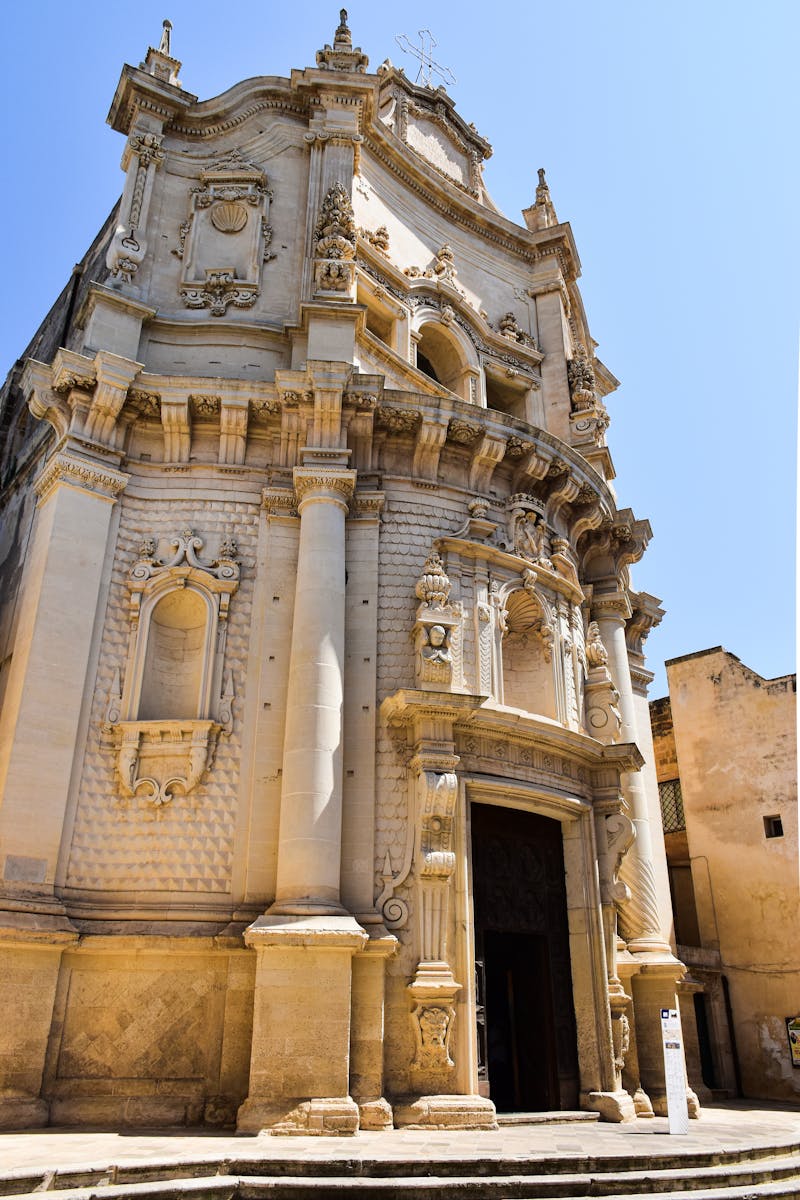
Lecce is a baroque jewel in the heel of Italy's boot, a city of honey-colored limestone churches, sun-drenched piazzas, and some of the best food in the Mediterranean. Known as the "Florence of the South," Lecce offers American retirees the authentic Italian lifestyle they dream about — without the crowds and costs of Tuscany or the Amalfi Coast. Add Puglia's 7% flat tax on foreign pensions, excellent public healthcare, and pristine beaches within a 30-minute drive, and Lecce becomes one of Europe's most compelling retirement destinations.
Why Retirees Are Choosing Lecce
International retirees are discovering what Italian vacationers have always known: the Salento region delivers an extraordinary quality of life at a fraction of the cost of northern Italy. Where a modest apartment in Florence or Rome commands EUR 1,200 or more per month, comparable housing in Lecce's historic center runs EUR 500-800. The food is arguably better — Puglia produces more olive oil than any other Italian region, and the local cuisine revolves around fresh seafood, handmade orecchiette pasta, burrata, and vegetables from the surrounding farmland.
Lecce remains a walkable, human-scaled place. The centro storico is compact enough to explore entirely on foot, and daily life revolves around the passeggiata — the evening stroll through Piazza Sant'Oronzo. For retirees seeking genuine Italian immersion rather than a tourist bubble, Lecce delivers in ways that more famous destinations cannot.
Cost of Living
Lecce is among the most affordable cities in Italy. A retired couple can live comfortably on approximately EUR 1,785 per month, including a well-located two-bedroom apartment, regular dining out, private health insurance, and weekend excursions along the coast. Budget-conscious retirees can manage on around EUR 1,100 per month, while those seeking a premium lifestyle with a restored palazzo apartment and regular travel will spend approximately EUR 3,130.
Housing
Furnished one-bedroom apartments in residential neighborhoods outside the centro storico start around EUR 400-500 per month. In the historic center, a comfortable two-bedroom near Piazza Duomo or Porta Napoli typically rents for EUR 700-900. Restored apartments in historic buildings or villas near the coast range from EUR 1,200-1,500. Property purchase prices are also attractive: apartments in the old town run EUR 1,200-1,800 per square meter, a fraction of Rome or Milan.
Food
Puglia's food is the region's greatest gift to retirees. A meal at a neighborhood trattoria — antipasti, orecchiette alle cime di rapa, grilled fish, and house wine — costs EUR 15-25 per person. Espresso at a bar is EUR 1, and a kilo of fresh tomatoes from the market rarely exceeds EUR 2. A couple shopping at Conad or the Mercato Coperto can feed themselves well on EUR 250 per month for groceries alone.
Key Takeaway
Lecce's cost of living is 30-40% lower than Rome or Milan. A couple spending EUR 1,785 per month can afford a charming historic-center apartment, eat out several times per week at trattorias, maintain private health insurance, and enjoy regular weekend trips to Salento's beaches and nearby towns like Otranto and Gallipoli.
Healthcare
Italy's Servizio Sanitario Nazionale (SSN) is one of the world's highest-ranked public healthcare systems. Legal residents — including those on an Elective Residency Visa — can enroll by registering with the local ASL and paying an annual contribution of approximately EUR 400, gaining access to GP visits, specialist referrals, hospital care, and prescriptions at minimal cost.
Lecce's main hospital, Ospedale Vito Fazzi, offers comprehensive services including emergency care, cardiology, and oncology. Private insurance from providers like UniSalute or Generali costs EUR 100-250 per month. For specialized procedures, Bari's major university hospitals are 90 minutes away by train.
Visa and Residency
The primary pathway for American retirees is Italy's Elective Residency Visa (Visto per Residenza Elettiva), requiring proof of stable passive income of at least EUR 31,000 per year for a single applicant, increasing by 20% for a spouse. Qualifying income includes Social Security, pensions, and investment income. You must also show proof of accommodation and hold private health insurance.
The visa is initially issued for one year and is renewable. After five years of continuous residence, you can apply for an EU long-term residence permit. Italian citizenship is available after 10 years, though the process is famously slow. Employment is strictly prohibited — this visa is designed exclusively for people living on passive income.
Tax Considerations
Italy's standard tax rates on personal income are steep, ranging from 23% to 43%. However, Puglia is one of eight southern Italian regions that qualifies for a special 7% flat tax regime on all foreign-sourced income. This covers US Social Security benefits, pension distributions, IRA withdrawals, investment dividends, rental income from US property, and capital gains — all taxed at just 7% for a period of 10 years.
A critical caveat: you must establish tax residence in a municipality with fewer than 20,000 inhabitants. Lecce proper has roughly 95,000 residents, so retirees seeking the 7% rate typically register in charming smaller towns within the province — Otranto, Nardo, Galatina, or Copertino, all within 20-40 minutes of the city. The US-Italy tax treaty helps prevent double taxation, and US citizens can credit Italian taxes paid against their US obligation.
Language and Culture
Italian is essential for daily life in Lecce. English proficiency outside hotels and tourist restaurants is limited. Most retirees find that investing in Italian language classes — available at the University of Salento and private schools — dramatically improves their experience. Basic conversational Italian is achievable within six months, and locals warmly appreciate any effort to speak their language.
Culturally, Lecce offers a rich calendar: the Festa di Sant'Oronzo in August, the Notte della Taranta folk music festival, and weekly outdoor markets keep the social calendar full. The city has a lively cafe culture, artisan workshops specializing in papier-mache and ceramics, and a small but welcoming community of foreign residents.
Climate and Seasons
Lecce enjoys a classic Mediterranean climate with long, warm summers and mild winters. Summer temperatures peak around 89 degrees F in July and August. Winters are gentle — January lows average around 40 degrees F, and snow is virtually unheard of. Spring and autumn are particularly delightful, with temperatures in the 60s-70s F and fewer tourists.
Getting There
The nearest airport is Brindisi-Salento Airport (BDS), about 40 minutes north of Lecce, with frequent domestic flights to Rome and Milan and seasonal European connections. From Miami, the typical journey takes 12-14 hours: a direct flight to Rome Fiumicino (approximately 11 hours), followed by a 1-hour domestic flight or 5-hour high-speed train to Lecce via Bari. Lecce is 6 hours ahead of Eastern Time.
The rail network connects Lecce to Bari, Brindisi, and Taranto, while local buses reach smaller coastal towns. A car is helpful for exploring the Salento countryside, visiting the trulli houses of Alberobello, or day-tripping to the sassi caves of Matera in neighboring Basilicata.
Key Takeaway
Lecce is ideal for retirees who want authentic Italian immersion — baroque beauty, world-class food, and a genuine southern pace of life — at a fraction of Tuscany or Amalfi Coast costs. The 7% flat tax on foreign pensions is a powerful financial incentive, and Italy's public healthcare provides peace of mind. The trade-off is a smaller English-speaking community, but retirees willing to embrace the language find Lecce rewards them with one of Europe's richest retirement experiences.